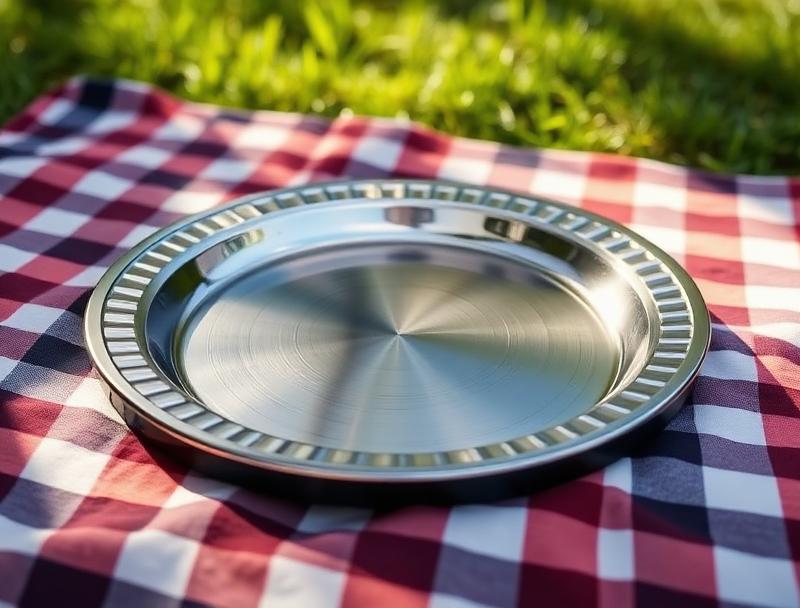
Gear Tested in This Review
Key Highlights
- Virtually indestructible
- Dishwasher safe
- Heat resistant
Product Specifications
Stainless steel camping plates promise lifetime durability. I put that promise to the test.
The Drop Test
I deliberately dropped these plates from various heights onto rocks, concrete, and packed dirt. Result: dents but no cracks or breaks.
Heat Testing
Used directly on a camp stove to warm food. No warping, no discoloration. The raised edges kept sauces contained perfectly.
Long-Term Use
After 2 years of regular camping, hiking, and backyard BBQs, these plates look nearly new. The brushed finish hides minor scratches well.
Weight Consideration
At 180g per plate, they're not ultralight. But for car camping and picnics, the weight is a non-issue.
Why 304 Stainless Is the Sweet Spot
Not all stainless steel is created equal. The "304" designation refers to a specific alloy with 18 percent chromium and 8 percent nickel. That composition resists corrosion, handles heat, and stays food-safe across an enormous temperature range. Cheaper camping plates often use 201 stainless, which corrodes more easily and tends to discolor over time. The price difference is small; the durability difference is substantial.
What Actually Wears Out Camping Plates
After two years of regular use, here's what shows on these plates and what doesn't:
- Surface scratches: yes, but only visible up close
- Dents: a few small ones from impact with rocks
- Discoloration: minimal, mostly near edges where food heated repeatedly
- Warping: none at all, even after stove use
- Edge damage: zero – the rolled edge has held up perfectly
By contrast, a cheap aluminum plate I tested in parallel showed all of the above after six months.
The Underrated Benefit: Easy Cleaning
Stainless steel's smooth surface releases food easily. Even tomato sauce, melted cheese, and sticky barbecue sauce rinse off with minimal scrubbing. After 100+ uses, mine show no staining and no lingering odors – something I cannot say about my plastic plates that absorbed garlic smell years ago and have never let it go.
Heat Performance for Camp Cooking
I've reheated rice on these plates directly on a camp stove (low heat, watching carefully). The plate transferred heat evenly without warping or developing hot spots. The rim stayed cool enough to grab with bare fingers. This dual-purpose use saves you from packing a separate pan for simple reheating tasks.
Weight Trade-Off Honest Assessment
At 180 grams per plate, this is not ultralight gear. For backpackers measuring ounces, titanium remains the better choice. For car campers, weekend warriors, and anyone walking gear from a parked car to a campsite, the weight is genuinely irrelevant.
The Lifetime Math
Average lifespan of a quality stainless steel plate: 20+ years. Average lifespan of a cheap plastic camping plate: 2-3 years.
Even ignoring the environmental benefits of buying once, the math strongly favors stainless for any regular camper.
Final Take
If you camp more than a few times a year and want gear you can ignore until you need it, these plates are the answer. They are not exciting. They will not start conversations at the campsite. They will simply work, every trip, for decades.
Final Verdict
The last camping plate you'll ever need to buy.
Where to Buy
* Prices may vary. We may earn a small commission from qualifying purchases.