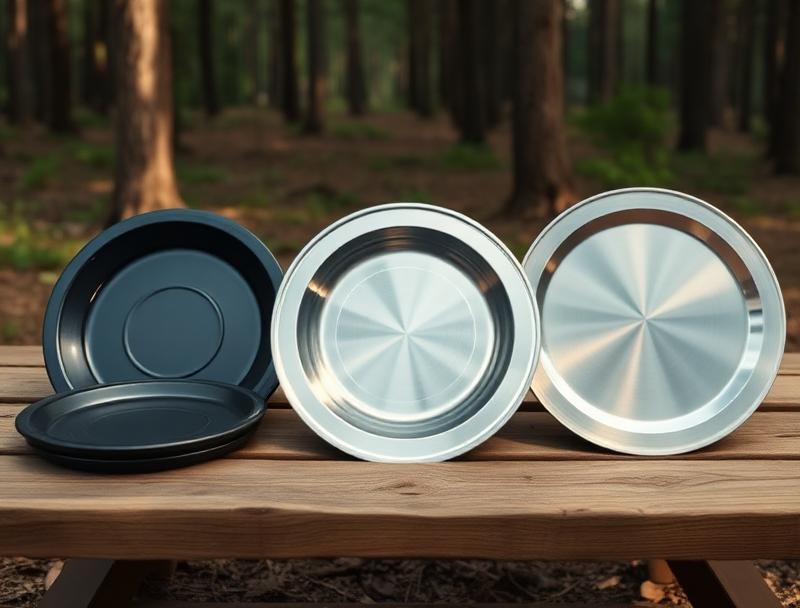
Gear Tested in This Review
Key Highlights
- Premium lasts 5x longer
- Budget fine for beginners
- Mid-range best value
Product Specifications
I bought both the $8 budget camping plate set and the $35 premium titanium version. Here's my honest comparison after 3 months.
The Experiment
I deliberately bought both ends of the spectrum to answer the question every camper asks: is expensive gear worth it?
Budget Plates ($8 for 4-pack) **Material:** BPA-free plastic **Weight:** 180g per plate **Feel:** Light, slightly flimsy
After 3 Months: - One plate cracked from hot food - Colors faded from dishwasher - Developed scratches (bacteria concerns) - Still functional for car camping
Premium Titanium ($35 for 2-pack) **Material:** Grade 1 titanium **Weight:** 45g per plate **Feel:** Ultralight, sturdy
After 3 Months: - Zero damage - Natural patina developed (looks better!) - Works on camp stove for reheating - Feels luxury in hand
Mid-Range Steel ($18 for 4-pack) I also tested a mid-range option as a control.
After 3 Months: - Minor dents from drops - Some water spots from hard water - Solid performance overall - Best value for most campers
My Recommendation
Beginners: Start with budget or mid-range. Learn what you need before investing.
Regular Campers (5+ trips/year): Go mid-range steel. Best balance of durability and cost.
Weight-Conscious Hikers: Titanium is worth every penny if you're counting grams.
What the Three-Month Test Actually Revealed
When I started the comparison, I expected the premium titanium to dominate every category. Instead, the results were more nuanced. Titanium won on weight and longevity. Mid-range steel won on overall practical value. Budget plastic actually had legitimate use cases I didn't expect.
When Budget Gear Is the Right Choice
If you camp once or twice a year, a $9 plastic set will serve you fine for several seasons. There's no shame in buying inexpensive gear for occasional use. The environmental argument against cheap plastic is real, but so is the financial argument against spending $35 on a plate you'll use four times.
For one-time events – a group camping trip, a child's birthday picnic, a beach day with extended family – budget plates often make more sense than premium ones, especially if they'll be lent out, dropped, or lost.
The Mid-Range Sweet Spot
After three months, the $18 stainless steel set was the one I kept reaching for. It survived everything, looked decent the whole time, weighed a reasonable amount, and won't haunt me if I scratch it. For 90 percent of casual campers, this is the right choice.
Where Premium Pays Off
Premium titanium plates make sense if any of these apply:
- You backpack frequently and count grams
- You camp more than 15 nights per year
- You appreciate well-made objects regardless of necessity
- You want gear you'll never need to replace
Outside those conditions, premium is a luxury, not an investment.
Hidden Costs No Review Mentions
Budget plates have an underdiscussed problem: they degrade. The plastic scratches, dishwasher cycles fade the color, and you eventually toss them. That replacement cycle has both financial and environmental costs that rarely show up in side-by-side reviews.
Mid-range stainless and premium titanium have almost no replacement cost. Five years from now, both will still look essentially identical to today.
My Final Recommendation Matrix
- 0 to 4 trips per year: Budget set, no guilt
- 5 to 15 trips per year: Mid-range stainless, best overall value
- 15+ trips or backpacking focus: Premium titanium, worth every dollar
Buy honestly for the camping you actually do, not the camping you imagine you'll do.
Final Verdict
Start budget, upgrade when you know your camping style.
Where to Buy
* Prices may vary. We may earn a small commission from qualifying purchases.